
Yoga and Pilates Hairstyles That Don't Dig In When You Lie Down
The yoga and Pilates hairstyles that do not dig in when you lie down are low ones: a loose low ponytail at the nape, a low bun, a side ponytail, or a side braid. A high bun or top knot sits right where your head meets the mat or the reformer headrest. Move the hair down or to the side, keep it loose, and put the buckle where your head will not land on it.

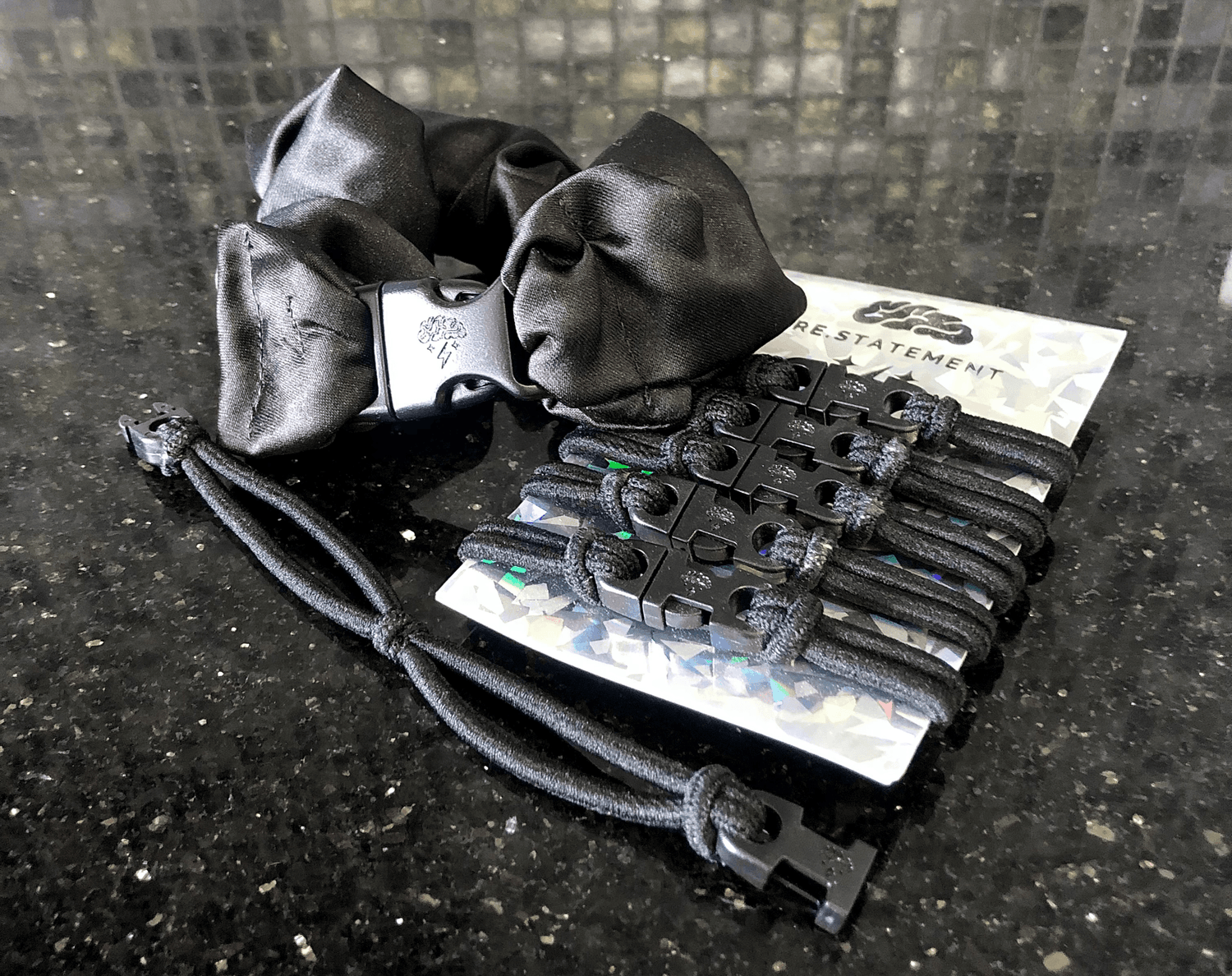
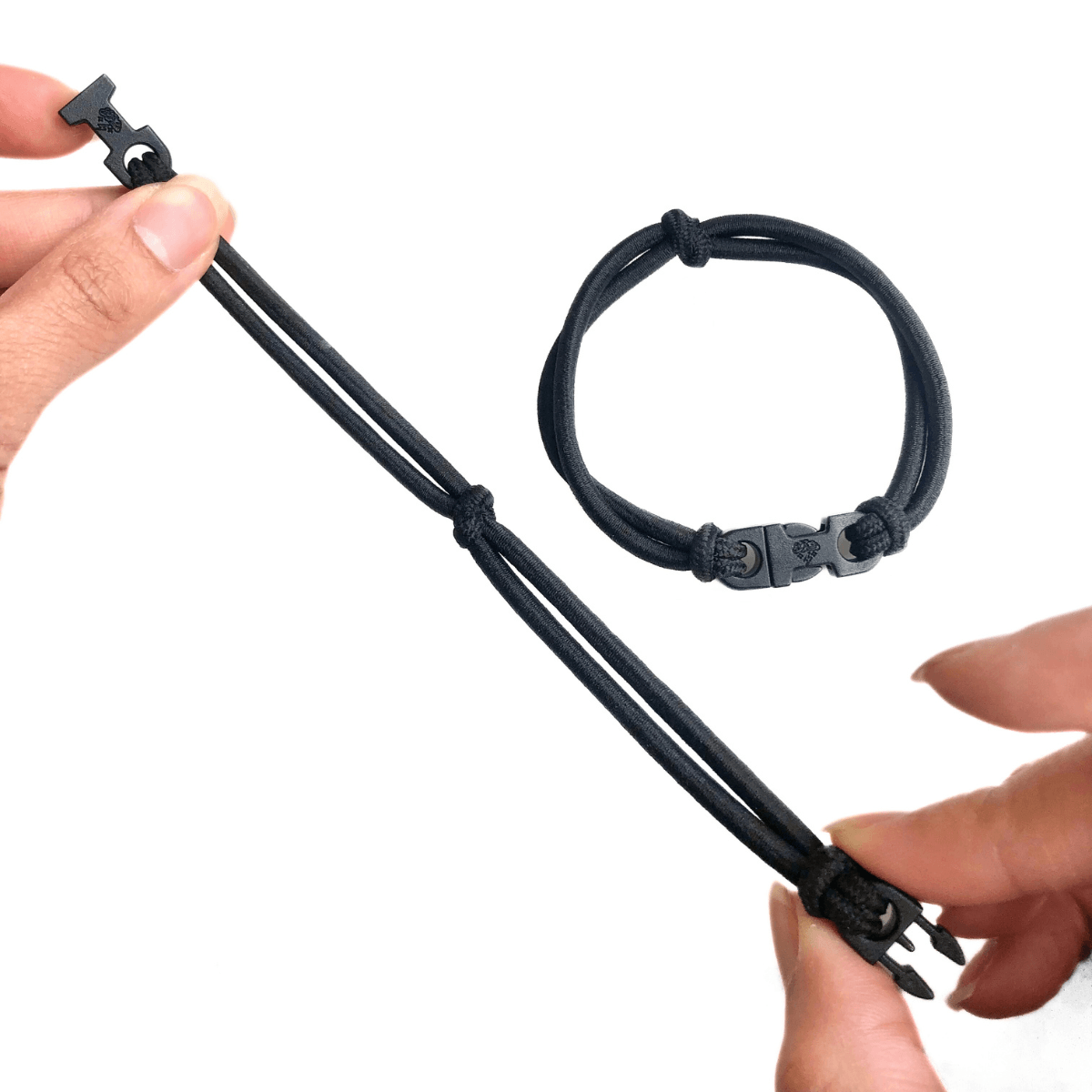
Try one in your next class. A single Buckle Hair Tie for a low ponytail, then one click to let it down in savasana.
Add the Champagne Blonde Sample to cart, $4.99Why High Styles Dig In on the Mat and the Reformer
Yoga and Pilates put you on your back more than almost any other workout.
In yoga, every class ends in corpse pose. WebMD's instructions are simple: lie flat on your back and close your eyes, and stay there anywhere from a few minutes to 20 minutes or longer. That is a long time to lie on a knot of hair.
On the reformer, much of the work happens supine on the carriage. Balanced Body, the equipment maker, says the headrest is there to support your head, neck, and shoulders while you lie face up. Its setup guide asks for your ear to sit over the center of your shoulder and your jaw line to be close to perpendicular to the carriage.
A high bun makes that hard. It props the back of your head up, tips your chin toward your chest, and turns a neutral neck into a crooked one. A ponytail at the crown does the same thing with a lump in the middle.
The fix is geography. Get the bulk of your hair below or beside the spot where your head rests.
Keep It Loose, Then Keep It Low
Comfort and hair health point the same direction here.
The American Academy of Dermatology says plainly that if a hairstyle feels painful, it is too tight, and that styles which constantly pull on hair can lead to hair loss over time. It also recommends switching up your hairstyle regularly so hair can recover.
University of Iowa Health Care gives the same advice in more specific terms: wear loose ponytails and buns, and wear them low on your head instead of high.
A 2016 review of 19 studies in the Journal of the American Academy of Dermatology, led by researchers at Johns Hopkins, sorted hairstyles by risk. Low tension styles, such as loose buns, landed in the low risk group. Tight, high tension styles that pull on the hair root, including tight ponytails, knots, and buns, were the ones to watch.
So the ideal mat style is low, loose, and changed up from class to class. Snug enough to hold through a flow, loose enough that you forget it is there.

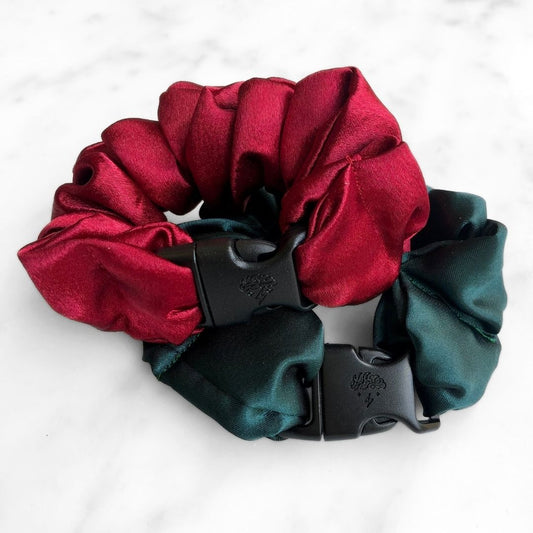
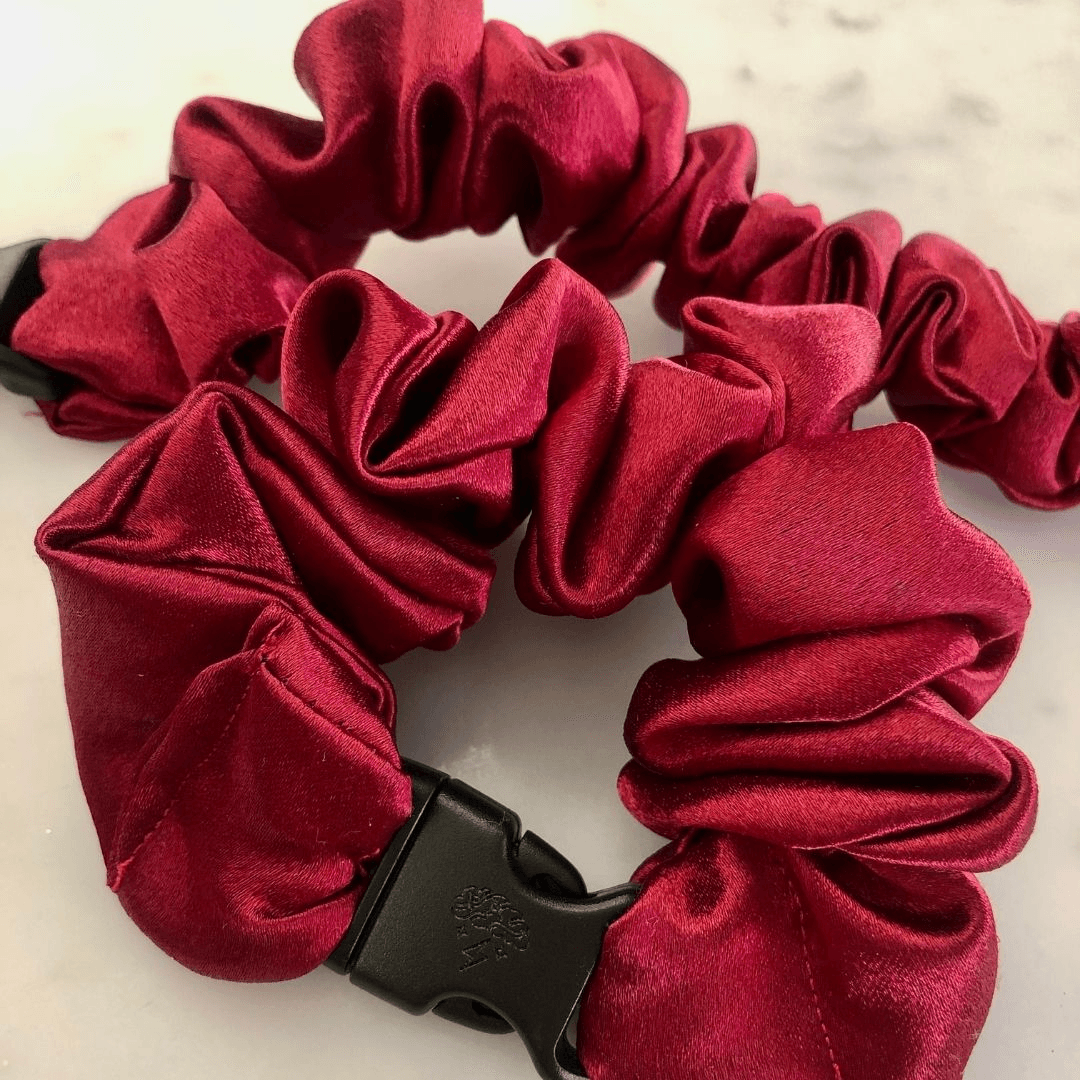
For a loose low bun with gentle, adjustable tension. The Black Velvet Buckle Scrunchie, soft velvet with a matching buckle.
Add the Black Velvet Buckle Scrunchie to cart, $12Low Styles for Yoga
These three cover almost every class, from slow flow to power.
The low nape ponytail
- Gather your hair at the nape of your neck, below the bump at the back of your skull.
- Wrap your Buckle Hair Tie or Buckle Scrunchie two to four times. Finer hair usually needs four or more, and thicker hair about two.
- Wrap the buckle in last so it sits on the outside loop, facing away from your head.
- Turn the buckle toward the side or bottom of the ponytail, not the top, so it stays flat when you lie back.
- Lie down and check. If you feel the tie, slide it a little lower.
The low bun
- Make the low nape ponytail above, with one fewer wrap than usual.
- Twist the length loosely and coil it flat against the back of your neck, not upward.
- Click the buckle open, take one more wrap around the coil, and close it.
- Keep the bun flat and wide instead of tall, so your head rests above it in savasana.
The low braid
- Start a loose braid at the nape, not at the crown.
- Braid to the end without pulling each section tight.
- Secure the end with a Buckle Hair Tie, buckle on the outside.
A braid is the best choice for inversions and long hair, because the length stays together when you are upside down. More on wrapping and buckle placement on our How It Works page.
Side Styles for Twists, Side Lying Work, and Savasana
A side style moves the hair completely out from under your head. That makes it the most comfortable option when you spend a lot of time on your back.
- Sweep all your hair over one shoulder.
- Tie a loose ponytail just behind and below your ear, or braid it loosely over the shoulder.
- Place the buckle on the outside loop, facing away from your neck.
- For side lying leg work, lie on the side without the ponytail so it rests on top.
- Next class, switch sides.
That last step matters more than it looks. Changing where the tie sits is one simple way to follow the AAD advice to switch up your style regularly.
Shopping for the mat? See our picks for yoga and Pilates.

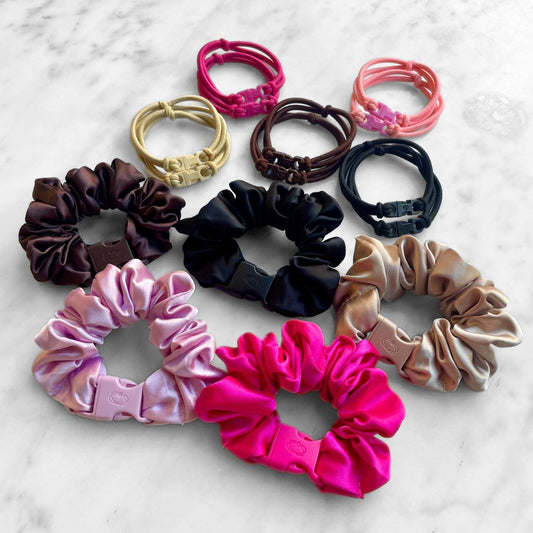
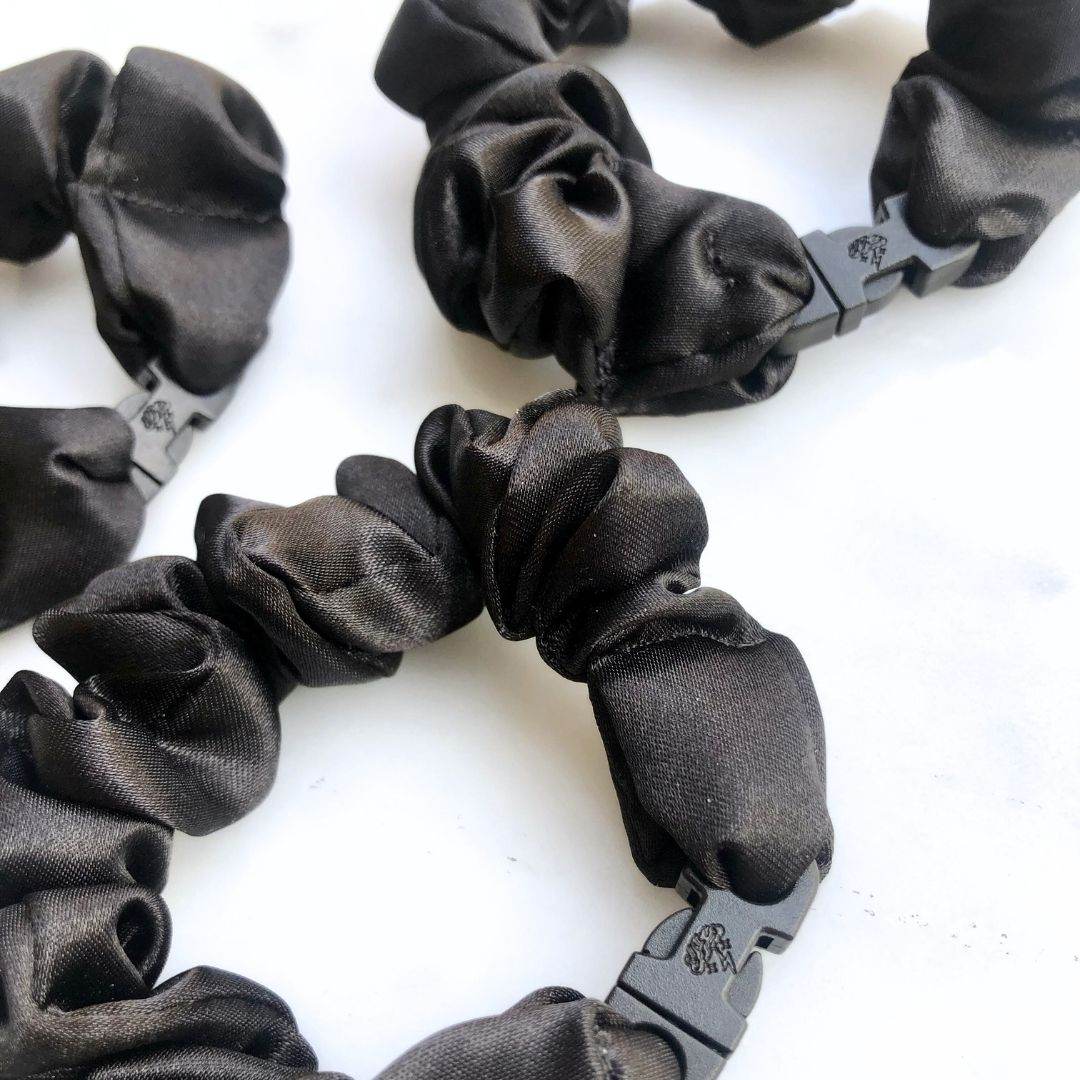
One for the mat bag, one for the car, one for your wrist. Three satin Buckle Scrunchies in Industrial Black, Chocolate Brown, and Champagne Blonde.
Add the Neutrals Starter Pack to cart, $25Reformer Hair: Working With the Headrest
The reformer adds one variable a mat does not have: a headrest you can raise or lower.
Balanced Body's guide describes three headrest heights. Low, or flat, is for any supine exercise and for people with flat upper backs. High is for clients with a forward head position or a deep rib cage. It also recommends the flat position for roll up exercises, so the neck does not over flex, and notes that a towel can be used along with the headrest or instead of it.
Your hair should not decide which height you use. Here is how to keep it out of the way:
- Footwork and other supine work: a low nape ponytail or a side ponytail. The hair drapes off the end or side of the headrest instead of propping your head up.
- Headrest flat: go with a side style. With the headrest down there is less room under your head for any bulk.
- Long hair: braid it. A loose braid stays together when you roll up, roll down, and move between lying, sitting, and kneeling.
- Short hair: two small low ponytails, one behind each ear, keep shorter lengths off your face without a bump in the middle.
Before the first exercise, lie back on the carriage and check. If you feel the tie, or your chin tips toward your chest, move the style lower or to the side.

The Best Part Is Taking It Down
Class is over. You roll up, reach back, and click the buckle. The tie unwraps and your hair drops, with nothing dragged back over it on the way out.
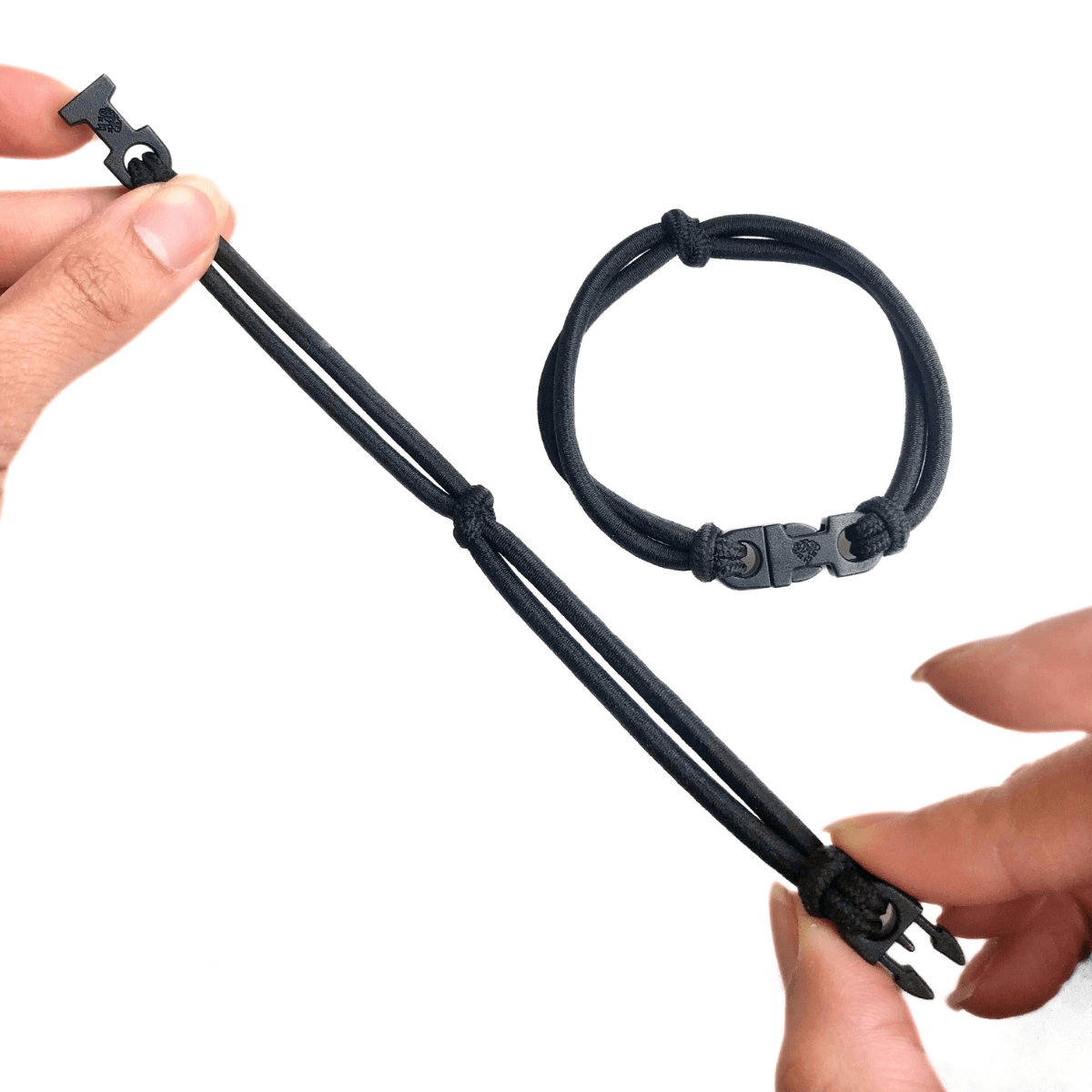
No peeling a sweaty elastic out of a braid. No losing half a ponytail to a snag. According to our FAQ, the buckle stays closed while the tie is wrapped under tension and opens only when you press it on purpose, and it still releases cleanly when your hair is sweaty or wet.
After a hot class, rinse the tie in cold water and let it air dry. Skip the dryer, since heat is the main thing that breaks down elastic.
If your problem is the opposite one, a ponytail that will not stay up during a fast class, read why your ponytail slips during workouts.

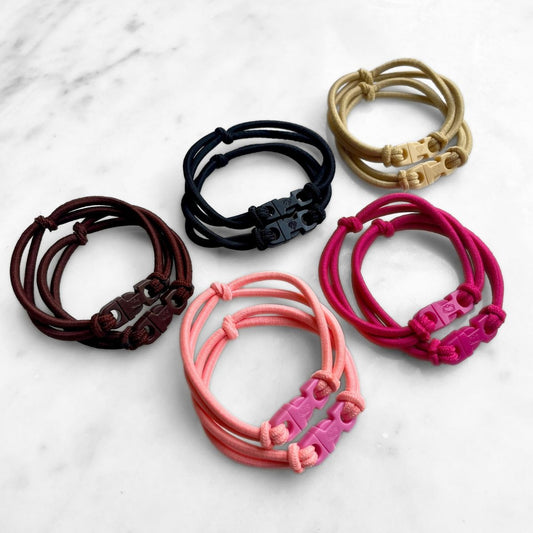
Enough for you, your daughter, and the studio bag. Ten Buckle Hair Ties in Baby Pink, slim enough for a low braid.
Add the Baby Pink 10 Pack to cart, $21FAQ
What is the best hairstyle for Pilates?
A low ponytail at the nape, a side ponytail, or a loose low braid. Each keeps your hair off the spot where your head rests on the mat or the reformer headrest, so your neck can stay neutral.
Should I wear a bun to yoga?
A low, flat bun at the nape works. A high bun or top knot will press into the back of your head every time you lie down, including savasana.
Where should the buckle sit so I cannot feel it lying down?
On the outside wrap, turned toward the side or bottom of the ponytail. That keeps it flat against a mat, headrest, or pillow.
Can I wear a Buckle Hair Tie to hot yoga?
Yes. Our FAQ says it holds through sweaty workouts and still releases cleanly when hair is wet. Rinse it in cold water afterward and let it air dry.
Sources
- American Academy of Dermatology: Hairstyles that pull can lead to hair loss
- University of Iowa Health Care: Traction alopecia, a type of hair loss
- ScienceDaily: Johns Hopkins review of hairstyles and traction alopecia, Journal of the American Academy of Dermatology (2016)
- Balanced Body: Reformer and Studio Tower guide, headrest positions (PDF)
- WebMD: How to Do Corpse Pose in Yoga